
On a chilly Friday morning, about 10 years ago, Chrissy and Kelly from 386.com embark on an unforgettable clamming class at Canaveral National Seashore. Guided by local experts, they dive into the world of clam harvesting, learning essential rules and techniques that highlight
A Cold Morning and a New Skill
Chrissy and Kelly found themselves at Canaveral National Seashore, ready to trade their usual digital gear for something a little muddier — a clamming class.
Armed with rakes, buckets, and curiosity, they joined a small group of early risers to learn how to harvest clams the right way. The instructor began with the basics: the tools. Not just any rake would do. “As long as the tines are at least an inch apart, it’s legal,” he explained, holding up a metal rake. Regular garden rakes, with their closely spaced tines, are a no-go for harvesting.
Learning the Technique
Clamming, it turns out, is more about rhythm and patience than strength. “Get your tines about two to three inches into the sand or mud,” their instructor continued. The water was cold enough to make anyone reconsider their hobbies, but the excitement of discovery kept spirits high.
They were told to wade out until the water hit about knee level, then face the bank to stay oriented. From there, the motion was simple but steady: rake toward yourself, feeling for that telltale resistance that signals a buried clam.
“It’s not a difficult technique,” he said, “but it takes practice to recognize what’s a shell and what’s just a rock.”
The Hunt for the Perfect Clam
Soon, everyone was knee-deep and raking away, hopeful for a catch. Kelly laughed as she pulled up empty sand again and again. “We have to find something, Chrissy. Come on!” she said, half joking, half determined.
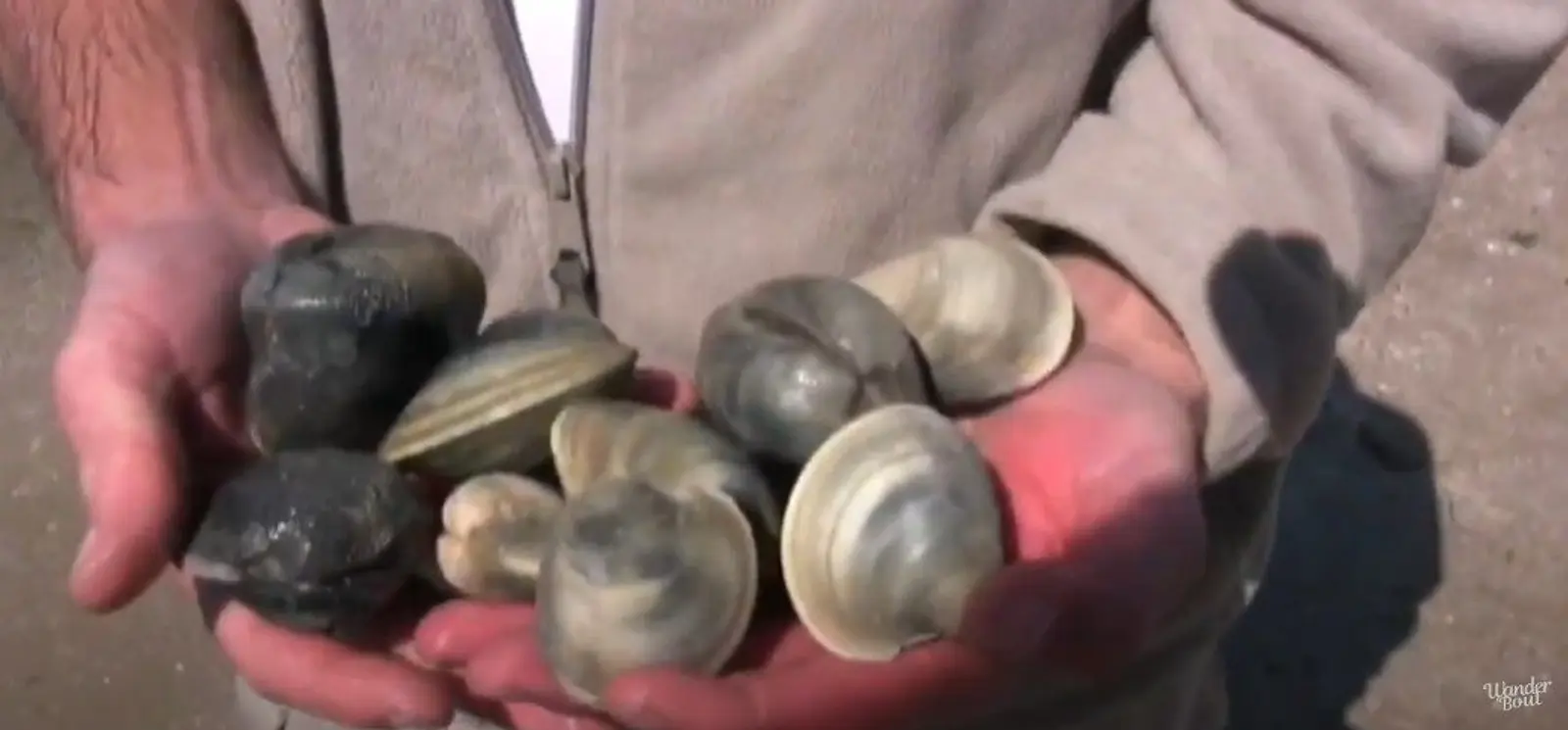
When they finally uncovered a clam, the instructor showed them how to measure for legality: at least one inch across. Too small, and it goes right back into the water. The precision of it all — measuring, sorting, and releasing — made them appreciate the delicate balance of sustainable harvesting.
“We’d be in trouble if we had to hunt for our survival,” Kelly joked, as Chrissy nodded in mock agreement.
More Than a Morning Class
The experience turned out to be less about gathering clams and more about connecting with coastal traditions. Clamming has long been a part of Florida’s seaside culture — a blend of patience, respect for nature, and simple reward.
The team learned not only how to use their tools but how to read the tide, understand the seabed, and appreciate the fragile ecosystem beneath their feet. The cold faded, replaced by laughter, teamwork, and that quiet satisfaction that comes from learning something completely new.
Lessons from the Sand
By the end of the morning, their buckets were lighter than expected — but their spirits weren’t. They’d gained a new perspective on Florida’s waterways and the people who rely on them.
So, whether you’re looking for a fun outdoor activity or just want to reconnect with the natural rhythm of the coast, a clamming class might be the perfect adventure. Just remember: bring your rake, your patience, and maybe a backup plan for lunch.
Affiliate Partner:
Been here? Add what you know.
Places change. Stories stay personal. Help keep this Field Note useful with a correction, a recent update, another detail, or a comment. Approved contributions appear here with their own credit and date.
Know a useful detail? Yours could be the first addition.
Charters, tours, stays, and other ways to turn the story into a trip.

Southern Saltwater Adventures
See the current trip options and availability for a related outing.

Ridin’ Rogue Charters
See the current trip options and availability for a related outing.
Wander ’Bout may earn a commission if you book through these links, at no extra cost to you.

