
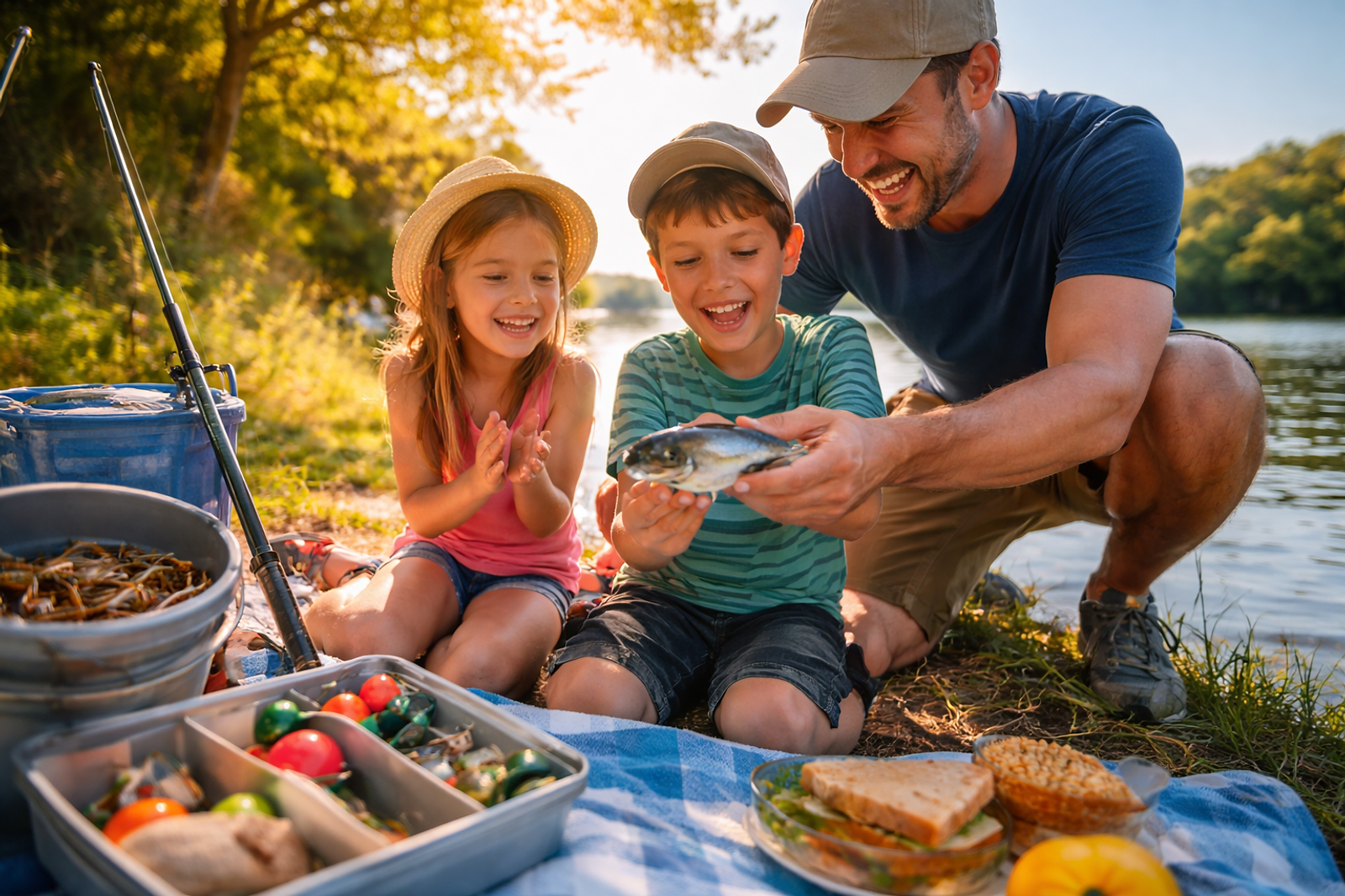
On a child’s first fishing trip, the adult may spend more time untangling line than holding a rod. Plan for that. Choose an easy place to stop, bring simple tackle and leave enough time for a snack before anyone is hungry and annoyed.
A nearby shore outing is a sensible starting point for many families. You can practice one skill at a time and head home when the child has had enough. A first trip does not need a boat, an expensive kit or a fish large enough to require two people in the photograph.
Choose the place before buying the gear
Look for legal public access, firm ground, room to cast and an easy route back to the car. Check bathrooms, shade and accessible seating where your family needs them. Visit first if you can; a promising mark on a map may turn out to have a steep bank or little room for a beginner.
Ask the local fisheries agency or tackle shop which small, commonly caught species are a reasonable target there. Choose tackle for those fish and that water. Nobody can promise a bite.
Georgia DNR’s fishing-with-kids page links to public fishing areas, parks and events, and recommends simple equipment and short trips close to home. If the adults are beginners too, a staffed fishing event can take some of the guesswork out of the first outing. Check the event’s current details before arriving.
Check the relevant state fishing rules for adults and children, including anyone helping with the rod, and any separate site permit. Freshwater and saltwater requirements can differ. A child’s exemption does not automatically cover the accompanying adult.
Start with a small, manageable setup
Have the child hold the rod before buying it. They should be able to grip it and operate the reel comfortably. A simple push-button spincast outfit can be an option; the right choice depends on the child and on who can teach them to use it.
For a basic freshwater bait setup, ask a knowledgeable person to help match a hook, float, weight and line to the local fish. Texas Parks and Wildlife’s beginner guide explains these parts and why hook size should suit the bait and target species. Check local bait and hook restrictions before rigging.
Consider a barbless hook where suitable. Have an adult manage sharp tackle and any changes to it. You can prepare the rig beforehand and keep hooks secured during transport; waiting at the bank while someone searches a tackle box is a slow way to begin.
Practice casting without a hook
Use a casting plug in an open space before the trip. Show the child how to check behind and beside them before moving the rod. Leave plenty of distance from people, pets and obstacles.
At the fishing spot, explain where each person stands and where the line should go. Help with one step, then let the child try it. You can spend the first visit learning to lower a bait into the water or reel steadily; a long cast can wait.
MassWildlife’s tips for taking kids fishing include practicing at home, keeping tackle simple and considering barbless hooks. The point of practice is to make the equipment familiar before there is water and a sharp hook involved.
Give water supervision its own job
Agree which adult is watching the children before anyone starts fishing. That person needs to stay attentive, with a clear handoff if another adult takes over. If you are alone and need to deal with a tangle, bring the child with you to a safe place away from the edge.
The American Red Cross recommends close, constant supervision around water, avoiding distractions, and wearing a U.S. Coast Guard-approved life jacket when fishing or boating. A life jacket adds protection; keep supervising.
Fit the jacket to the child before leaving home. The Coast Guard advises checking its weight and chest-size label, matching it to the activity and ensuring a snug fit. Adult jackets may not work for children. Check your state’s current boating requirements as well.
On a boat, discuss seating, safe movement and the emergency plan before leaving the dock. The person operating the boat has navigation duties; arrange adult supervision of children separately. If that cannot be managed comfortably, choose a simpler shore outing.
Pack for the child as well as the fish
| Bring | Why it earns a place |
|---|---|
| Properly fitted life jackets | To wear around the water and aboard the boat |
| Water, snacks and a way to clean hands | So a break does not require ending the whole outing |
| Hat, sun protection and suitable layers | For the conditions you checked before leaving |
| Spare clothes | Because wet sleeves can end an afternoon surprisingly quickly |
| Simple tackle and adult-controlled pliers | To manage the rig and remove hooks |
| A fish-identification reference and current rules | To know what you caught and what you must release |
| First-aid supplies, phone and the site’s location | To be prepared to get help if needed |
| A bag for waste and discarded line | To leave the fishing spot clear |
Check the weather and access conditions before departure. Choose another day if conditions make the site unsuitable. A promised outing can be rescheduled.
Keep the first session flexible
Give yourself a short outing window and permission to leave early. Watch the child rather than an age-based timetable. Cold hands, repeated frustration or a request to stop are useful information.
Let them choose manageable jobs: watching the float, turning the handle, helping identify the catch or deciding when to take a break. They do not have to touch bait or hold a fish to take part.
If nothing bites, try a small adjustment with local advice, then decide whether to pause or finish. Avoid turning the afternoon into a test of patience. You can talk about what you saw, eat the snack and try again another time.
Have a plan for the first fish
Before casting, explain what will happen if a fish comes in: an adult will help land it, identify it and deal with the hook. Check the rules before deciding whether to keep anything.
Florida FWC’s handling guidance recommends minimizing handling, keeping released fish in the water when possible, and wetting your hands if removal is necessary. Support the fish’s body; keep fingers away from gills and eyes. Species with teeth, sharp spines or special protections need appropriate handling by someone who knows what they are doing.
Have a camera ready if you want a quick photograph, but do not prolong handling to get it. The child can stand beside you instead of holding the fish.
After the trip
Ask what they liked and what they would change. The answer may be the fish, the boat, the worms or the stop for ice cream. Use it to plan the next outing.
Put the equipment away, collect the loose line and note what you need to replace. If the first attempt was short, tangled and mostly snack-based, you still know more about how to make the next one work.
Charters, tours, stays, and other ways to turn the story into a trip.

Southern Saltwater Adventures
See the current trip options and availability for a related outing.

Ridin’ Rogue Charters
See the current trip options and availability for a related outing.
Wander ’Bout may earn a commission if you book through these links, at no extra cost to you.